
Explore Vintage Macpherson Clan Bonnet Badges
Explore Vintage Macpherson Clan Bonnet Badges
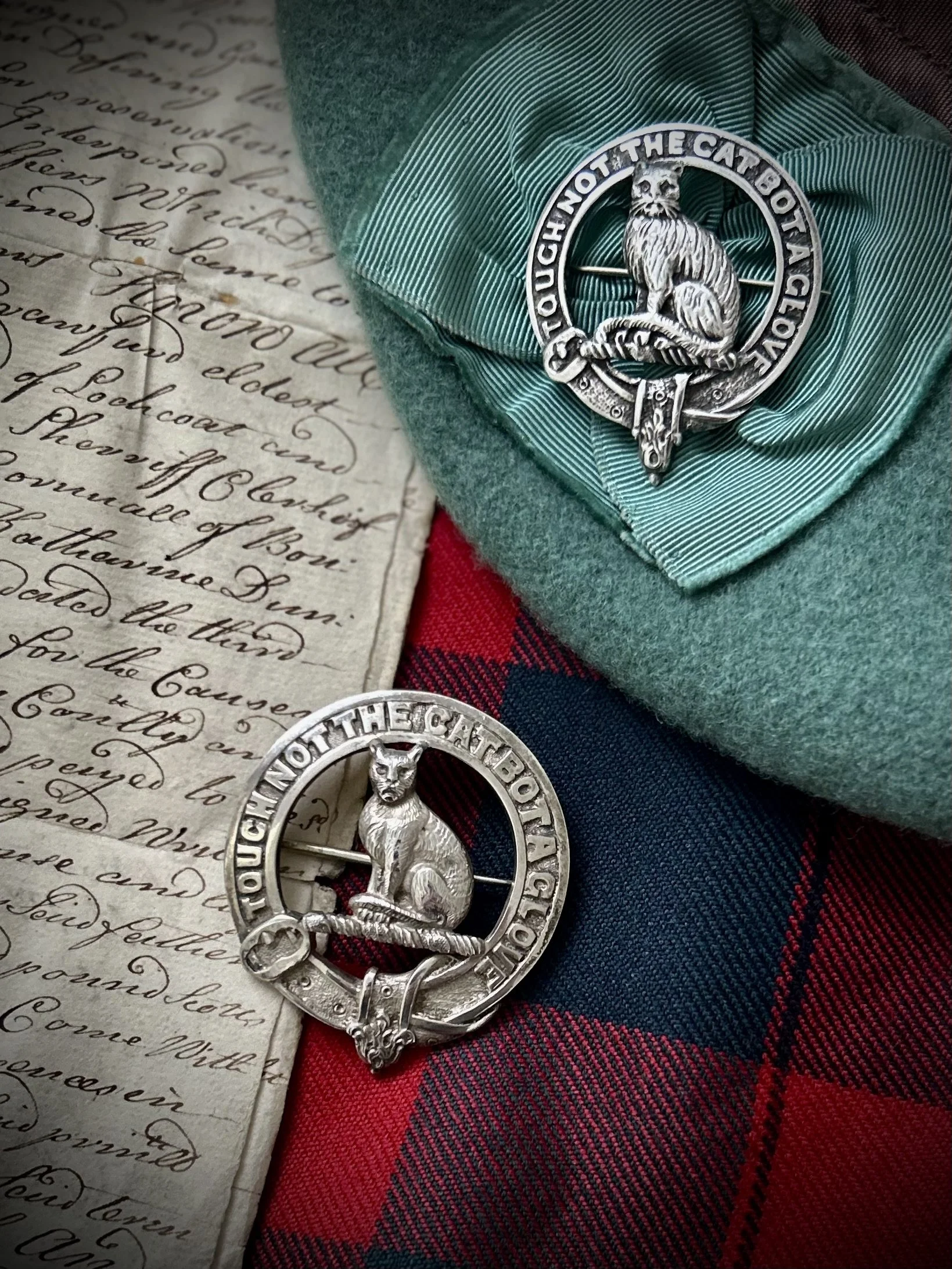
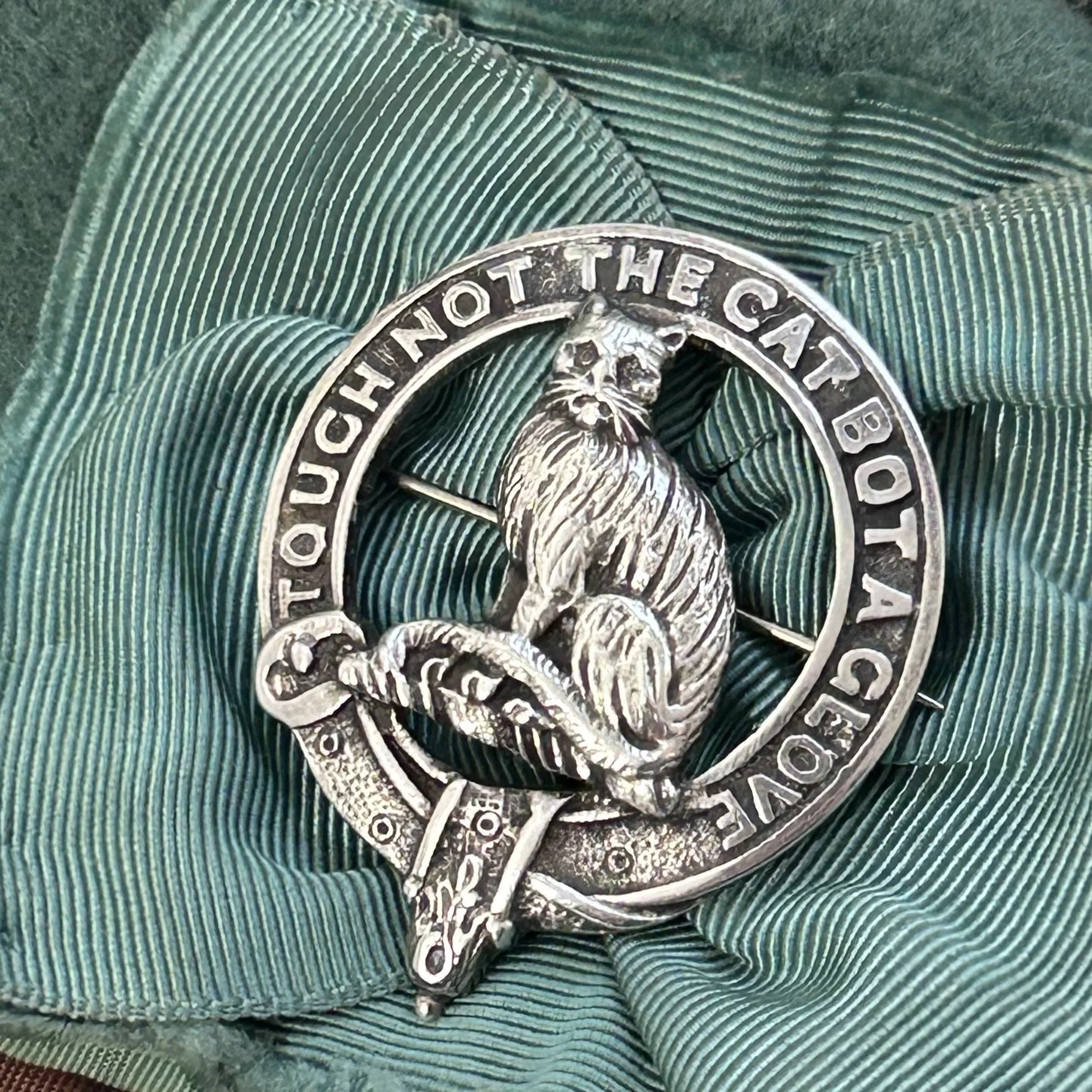
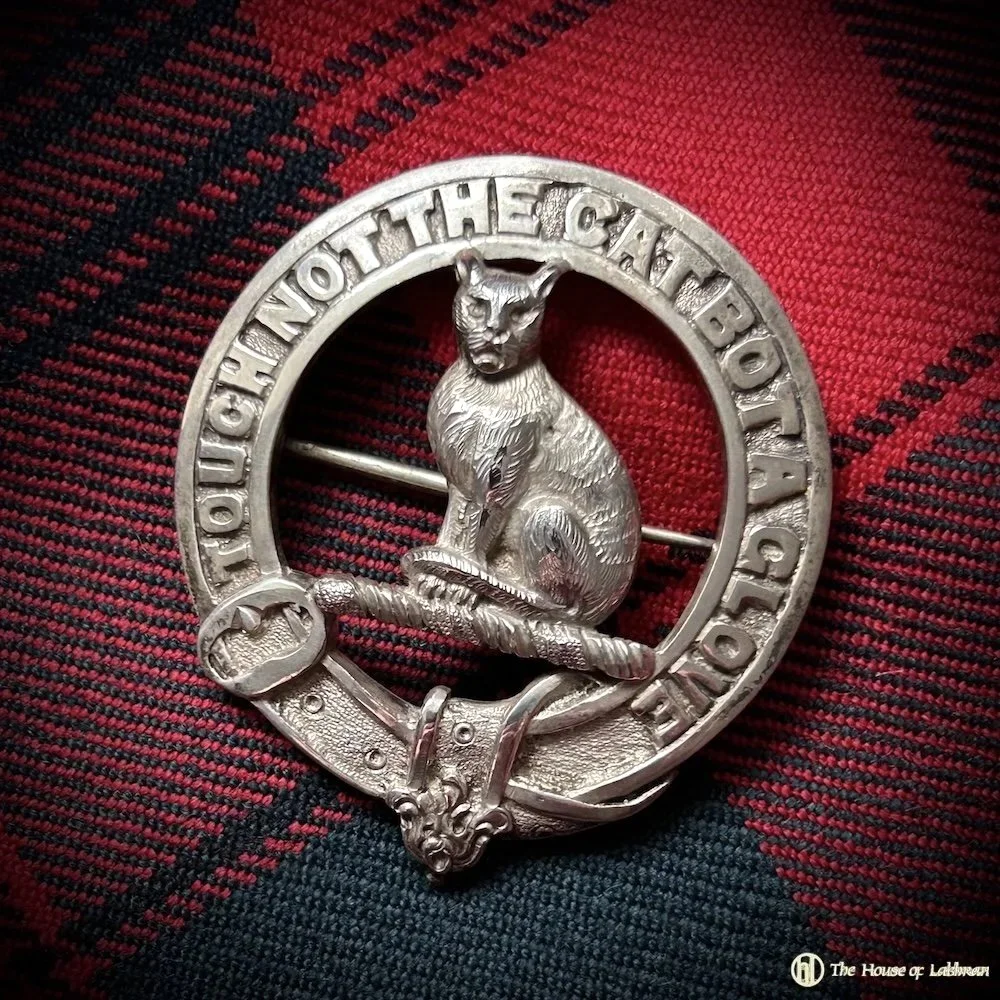
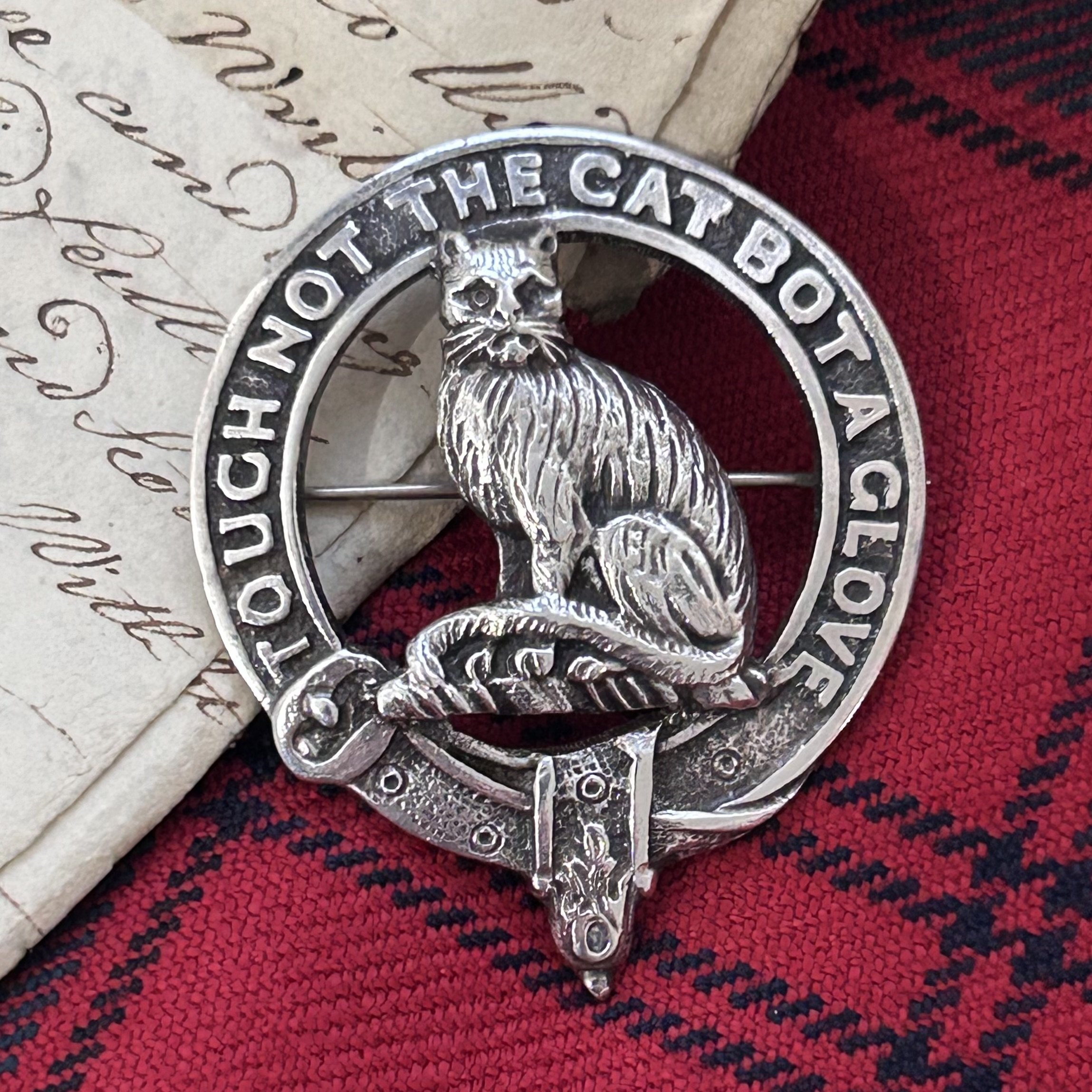
There’s no better representation of classic Macpherson style than a vintage Macpherson clan crest sterling silver bonnet badges, skillfully and meticulously made in Edinburgh.
These remarkable pieces showcase outstanding craftsmanship and meticulous attention to detail, embodying the rich heritage of the Macpherson clan. Among the finest examples from the 20th century, these vintage Macpherson clan bonnet badges are highly coveted collector's item and a distinguished emblem of Scottish tradition.
Motto: "Touch not the cat but a glove".
Motto translation: This is a reference to the wildcat, which is the clan's crest, and can only be touched with a glove.
Plant badge: White Heather.
Historic seats: The historic seat was Cluny Castle, with the modern seat being Newton Castle.
In Scottish Gaelic, the surname Macpherson is rendered as Mac a' Phearsain, meaning "son of the parson." The historical context of the Celtic church allowed priests to marry, which significantly influenced the genealogy of various clans.
It is believed that the founder of the Clan Macpherson chiefs was a man named Muireach or Murdo Cattenach, who served as priest in Kingussie, located in the Badenoch region.
Clan Macpherson is a proud member of the Chattan Confederation, also known as Clan Chattan. In 843, the leader of Clan Chattan was Gille Chattan Mor, and one of his descendants, who became the inaugural chief of Clan Macpherson, was forced to relocate to Lochaber by Kenneth MacAlpin, the first king of the Scots. This move marked a significant moment in the clan's history and evolution.
For more details and to explore our current range of vintage clan badges please visit the shop page.
The Rich History of the Macpherson Clan
The Macpherson Clan stands as a remarkable testament to Scotland’s storied past, entwined with tales of valor, loyalty, and adversity. With deep roots in the Scottish Highlands, the clan’s history is punctuated by pivotal events and traditions that shaped not only their identity but also the broader narrative of Scotland.
The Genesis of Clan Macpherson
Clan Macpherson's legacy dates back to 1309 when Robert the Bruce, the revered king of Scots, offered the lands of Badenoch to the chief of the clan as a reward for his support against the enemies of the crown, namely the feared Clan Comyn. The Macphersons, true to their allegiance, fulfilled the king's wishes, aligning themselves with the national cause and setting the stage for their future significance in Scottish history.
This bond between the king and the clan is not merely historical; it symbolizes the commitment of the Macphersons to protect their sovereignty and defend Scotland against external threats. Their strategic actions during this period laid a solid foundation for their subsequent rise and prominence in the region.
The Clan of the Three Brothers
An interesting aspect of the clan's tradition is its nickname, “The Clan of the Three Brothers.” This designation stems from chief Ewan Ban Macpherson, who had three notable sons: Kenneth Macpherson of Clunie, Iain Macpherson of Pitman, and Gillies Macpherson of Invereshie. This phrasing not only emphasises familial bonds but also highlights the important roles played by the descendants in shaping the clan’s future pursuits.
Conflicts in the 14th Century
The clan’s involvement in conflicts is prominent in the chronicles of the 14th century. A significant event, the Battle of Invernahavon in 1370, saw the Macpherson’s engaged in a fierce struggle against Clan Cameron under the Chattan Confederation. The battle catalysed an ongoing feud between the two clans, reflecting the complex dynamics of clan relations during this volatile period.
During this conflict, a dispute arose as to who should lead the right wing of the troops. The Clan Mackintosh, which favoured the Clan Davidson over the Macphersons, significantly impacted the battle's outcome. At one point, the Macphersons, feeling slighted, left the battlefield. However, they were eventually convinced to return, turning the tide in favour of the Chattan Confederation and resulting in a victory over the Camerons. Nonetheless, the tensions between the clans persisted, escalating into further battles, such as the notable Battle of the North Inch in 1396, witnessed by Robert III of Scotland himself.
The Legend of the Black Chanter
Among the rich lore of Clan Macpherson, the tale of the Black Chanter endures. According to tradition, following the climax of the Battle of Invernahavon, a ghostly piper appeared in the heavens, playing a haunting melody before his crystal pipes shattered upon hitting the ground—except for his wooden chanter, which only cracked. This enchanted instrument, called the Black Chanter, became a significant artifact and is preserved at the Clan Macpherson Museum in Newtonmore, acting as a reminder of the clan's resilient spirit and rich cultural heritage.
The Glenlivet Encounter
The 16th century marked further significant events for Clan Macpherson, particularly during the Battle of Glenlivet in 1594, fought between Protestant forces led by the Earl of Argyll and the Catholic Earl of Huntly. Prior to this battle, Argyll attempted to besiege Ruthven Castle, which was valiantly defended by the Macphersons, who held allegiance to Huntly. The Macphersons’ perseverance contributed to Argyll eventually relinquishing his siege, solidifying their reputation as formidable defenders in the face of adversity.
The history of Clan Macpherson is woven into the very fabric of Scotland’s past. Their enduring traditions, legendary battles, and unwavering loyalty to their kin and country exemplify the remarkable spirit that defines Scottish clans. As we explore the chronicles of the Macphersons, we not only gain insight into their unique story but also appreciate the broader narrative of Scotland, steeped in history, conflict, and resilience.